


A full staircase replacement is one of the most disruptive and expensive renovation projects in a home. It involves removing the existing structure, managing the period during which the staircase is out of use, installing an entirely new flight, and typically redecorating the hallway around it. For the majority of UK homes where the underlying staircase structure is sound and functional, this level of disruption is unnecessary.
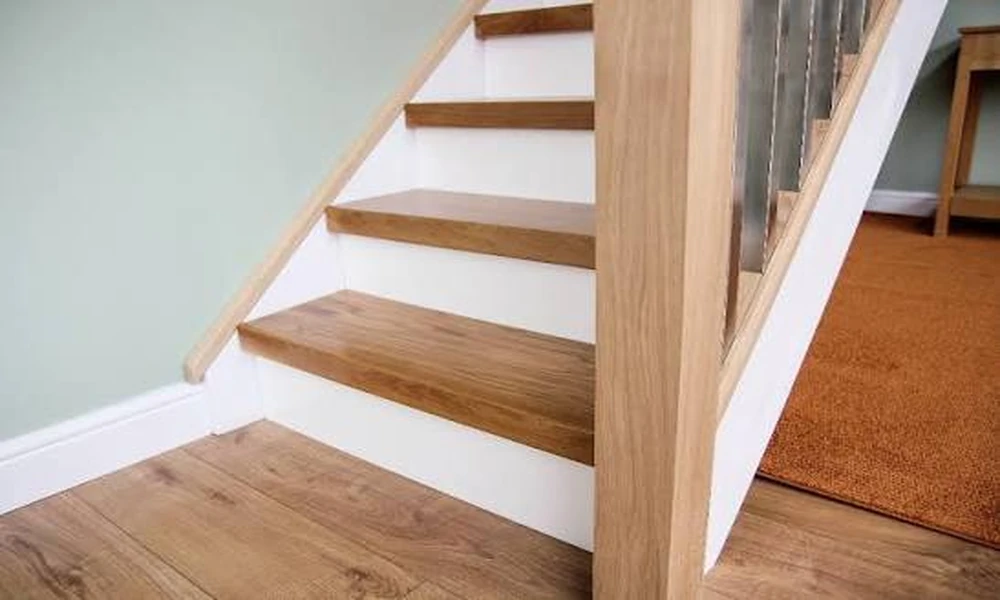
Oak stair cladding achieves a visually equivalent result, a staircase that looks and feels as though it has been built in solid oak from new, at a fraction of the cost and with a fraction of the disruption.
This guide explains how oak stair cladding works, what the process involves, and the key decisions to make before ordering.
What Is Oak Stair Cladding?
Oak stair cladding refers to solid oak tread and riser covers that are bonded directly over existing softwood staircase steps. The cladding tread sits on top of the existing softwood tread, bonded with a suitable construction adhesive, and extends to the front edge of the step with a bullnose nosing profile that matches a purpose built oak tread. The cladding riser covers the vertical face of each step. Together, the two surfaces produce a finished staircase that is visually indistinguishable from one built with solid oak treads from the outset.
The key practical requirement is that the existing softwood structure must be sound. Treads with movement, bounce, or creak should be secured before cladding is applied. Soft or damaged treads should be repaired or replaced. Carpet, gripper rods, and all tacks must be fully removed and the surface cleaned before any adhesive is applied. Cladding bonded over a compromised substrate will inherit the problem rather than conceal it. A full range of oak stair cladding is available from UK specialists covering standard treads and risers, curtail step kits, string cladding, and landing extension boards for complete staircase renovation projects.
Why Cladding Makes More Sense Than Full Replacement
For most UK domestic staircases, the structural carriage, strings, and newel post fixings are perfectly sound and will outlast the life of the property. The elements that make the staircase look tired, worn carpet, dated softwood treads, chipped risers, and ageing spindles, are all surface elements that can be addressed without touching the structure beneath. Cladding the treads and risers in oak, combined with new spindles, a replacement handrail, and updated newel posts, produces a complete staircase transformation without any structural work. The time saving, cost saving, and reduction in household disruption compared to a full replacement are all substantial.
What the Process Involves
The process of clad a staircase in oak follows a consistent sequence:
- Remove all carpet, gripper rods, and fixing tacks from the treads and risers
- Check each tread for movement and secure any that have flex or creak before proceeding
- Measure each tread and riser individually; dimensions on older staircases vary between steps and assuming uniformity leads to fitment problems
- Cut tread cladding to the measured width for each step, allowing for the bullnose nosing to sit flush at the front edge
- Apply a suitable construction adhesive to the tread surface and press the oak cladding into position; on higher-traffic staircases a combination of adhesive and discreet screw fixings through the riser provides additional security
- Fit the riser cover to the vertical face of each step with adhesive
- Address the transition at the bottom of the flight where the added cladding thickness meets the hallway floor level with a threshold strip or rebated detail
- Sand flush any minor height variations between adjacent treads and apply the chosen finish
Measuring Correctly Before Ordering
Accurate measurement is the most important preparation step. Staircase dimensions in UK properties, particularly those built before the 1970s, are rarely perfectly consistent from step to step. Measure the going (tread depth), width, and riser height of each individual step and record them separately rather than assuming a single set of dimensions applies to the whole flight. The added thickness of the cladding tread reduces the effective riser height at the bottom step relative to the floor level, which needs to be managed with a threshold or riser adjustment at that transition point.
Completing the Scheme: Balustrade and Finishing
Tread and riser cladding alone transforms the step surfaces, but completing the renovation with matching oak balustrade components creates a finished scheme rather than a piecemeal result. New oak spindles, a replacement handrail, and updated newel posts in the same species and grade as the cladding produce a coherent, unified staircase that looks entirely new. Sourcing all components from the same supplier in a consistent species and grade eliminates the tonal mismatches that arise when components are ordered from different sources. A comprehensive selection of oak stair parts including treads, handrails, spindles, and newel posts is available from specialist UK suppliers for complete staircase renovation projects.
Frequently Asked Questions
How thick is oak stair cladding?
Standard oak cladding treads are 20mm to 22mm thick; the added height of the cladding must be accounted for in the riser height calculation, particularly at the bottom step where the transition to the hallway floor level needs to be managed with a threshold or adjustment piece.
Can oak cladding be applied over carpet stairs?
No; all carpet, gripper rods, and tacks must be fully removed before cladding is applied, and the underlying tread surface must be flat, clean, and structurally sound for the adhesive bond to be reliable.
How long does it take to clad a staircase in oak?
A standard domestic staircase of twelve to fourteen steps can typically be clad in one to two days by a competent fitter, excluding any prior preparation work and the curing time of the adhesive before the stairs are returned to use.
What finish should be applied to oak stair cladding?
A floor-grade hard-wax oil or lacquer is required for the durability needed on a stair tread surface; standard furniture oil is not hardwearing enough for the concentrated foot traffic a staircase receives.
Final Thoughts
Oak stair cladding is one of the most cost-effective and impactful renovation options available for UK homeowners with a sound existing staircase structure. It delivers a result visually equivalent to a new oak staircase at a fraction of the cost and with minimal structural disruption. Getting the preparation right, measuring each step individually, and completing the scheme with matching balustrade components are the decisions that determine how good the finished result looks.
Specialist suppliers of solid oak stair cladding and staircase components carry the full product range needed to complete a renovation from tread cladding through to handrails and spindles.