


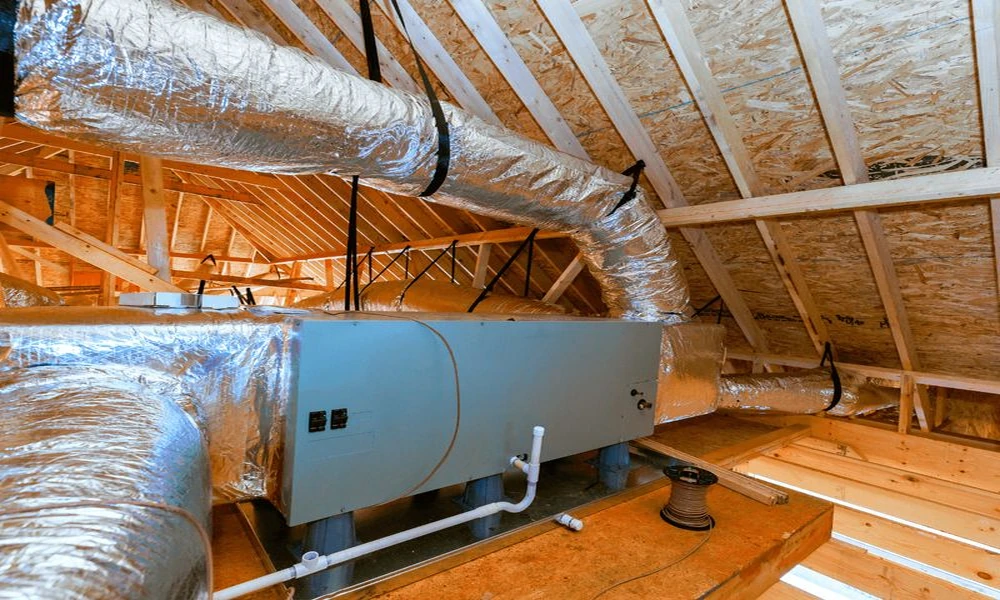
Most homeowners judge a roof by what they can see from the street. Curled tabs, missing shingles and dark streaks get noticed. What rarely gets noticed is the space directly underneath, where a closed attic in an Oklahoma July can run far hotter than the air outside.
That trapped heat works on the roof every single day of summer. Shingles bake from both sides, adhesives soften, and the wood deck cycles through heat and moisture that it was never meant to handle for long. A roof can look fine at year ten and fall apart at year fourteen, and the attic is often where the explanation sits.
For homes around Canadian County, where summer highs climb near triple digits and south winds rarely let up, it makes sense to have a roofing company in Mustang look at the attic during any inspection, not just the shingles. The way air moves through that space shapes how long the roof above it lasts. It also shapes cooling bills, comfort upstairs and even how a roof behaves during a winter ice storm.
Starting at the Soffit
Good attic ventilation works like a chimney. Cooler air enters low, near the eaves, warms as it rises, and leaves high, near the ridge. The intake side is where problems usually begin.
Soffit vents are easy to block without anyone noticing. Insulation blown in during an energy upgrade can pile right against the eaves and choke them off. Paint can seal the small perforations in older vented soffits. Some homes built during fast subdivision growth simply have fewer intake vents than the attic needs, because the soffit was treated as trim rather than part of the system.
When intake fails, the exhaust vents at the top have nothing to pull. Heat sits under the deck, and a ridge vent that looks perfect from the yard ends up doing very little.
The Middle of the Attic
Between the eaves and the ridge sits the attic floor, and this is where air sealing and insulation come into the picture. Ventilation removes heat that reaches the attic. Air sealing keeps conditioned air from the living space from leaking up there to begin with.
Gaps around light fixtures, plumbing stacks, wiring holes and the attic hatch let cooled air escape upward in summer and warm, moist air escape upward in winter. That winter moisture is what causes trouble for the deck. It condenses on the underside of cold sheathing, and over a few seasons it leaves dark stains, rusty nail tips and wood that feels soft underfoot.
ENERGY STAR’s guide to adding attic insulation walks through checking insulation depth, and the agency recommends sealing air leaks first so the insulation can do its job. Baffles near the eaves matter here too. These simple channels hold insulation back from the soffits so the intake path stays open.
A Quick Attic Check You Can Do
Before calling anyone, a homeowner can learn a lot from a short trip through the hatch. Pick a cool morning for it, since an attic in the heat of the afternoon can become dangerous fast, and Ready.gov’s extreme heat guidance is a good reminder of how quickly heat illness sets in. Bring a flashlight, step only on framing, and look for these signs:
- Daylight visible at the eaves, which tells you whether soffit air can actually get in
- Insulation that is crushed, uneven or stuffed tight against the roof deck at the edges
- Dark staining, frost marks or rusted nail points on the underside of the sheathing
- A musty smell, which often points to moisture that has nowhere to go
- Bathroom or kitchen fans that vent into the attic rather than outside
Any one of these is worth a photo. Two or three together usually mean the attic is shortening the roof’s life.
At the Ridge
The exhaust side comes in a few forms. Continuous ridge vents run along the peak and are common on newer homes. Box vents sit as individual squares near the top. Turbines spin with the wind, and power vents use a motor and thermostat.
Mixing these types is a common mistake. A powered fan on a roof that also has a ridge vent can pull air down through the ridge instead of up from the soffits, short circuiting the whole system. In some cases, a strong powered fan can even pull cooled air out of the house through ceiling gaps. Balance between intake and exhaust matters more than adding more vents.
Ridge vent quality varies as well. Lower profile products can underperform when installed over a ridge slot that was cut too narrow. Some shingle makers tie their warranty terms to proper ventilation, so a poorly vented attic can affect coverage when a claim comes up later.
What It Means for the Shingles
Asphalt shingles rely on oils that keep them flexible. Constant heat from below drives those oils out faster. The result is brittle shingles that crack in a hard wind, lose granules early and curl at the edges. In a place where strong spring storms and gusty south winds are routine, brittle shingles fail sooner than flexible ones.
Heat also stresses the sealant strips that bond each shingle to the course below. When those bonds weaken, wind can lift tabs that would otherwise hold. That is one reason two roofs of the same age on the same street can look so different after the same storm.
Planning Around It
The best moment to fix attic ventilation is during a reroof, when the deck is exposed and soffit work can be done at the same time. Correcting intake, sealing the attic floor, adding baffles and choosing one consistent exhaust style can often happen within the same project rather than as separate jobs.
Even without a new roof on the calendar, an attic that breathes properly pays back in steadier upstairs temperatures and a lighter load on the air conditioner through a long Oklahoma summer. The shingles benefit just as much. A roof that only has to deal with weather from above tends to last a good deal longer than one fighting heat from both directions.